Helsing Secures $1.8 Billion Series E to Scale Autonomous Defense Tech
Helsing just closed a $1.8 billion Series E, pushing its post-money valuation to $18 billion.
The round, led by General Catalyst, signals that the European defense tech sector is now competing directly with Silicon Valley for mega-rounds, and the capital flow is focused on AI autonomy, not just drones.
The Funding Mechanics
The round’s size dwarfs recent European defense deals. Its $18 billion valuation is more than double that of Quantum Systems, which closed a $1.2 billion Series D weeks prior. Investor demand reportedly exceeded the round's available volume, a rare signal for a company outside the U.S. tech ecosystem. The list of backers reads like a who's-who of growth-stage capital: Dragoneer, Lightspeed, Goldman Sachs Alternatives, and JPMorganChase are now on the cap table alongside Accel and the founders’ own Prima Materia. The board composition—co-chaired by Daniel Ek and Tom Enders—remains unchanged, suggesting founder control is intact despite the dilution.
The Product: CA-1 Platform
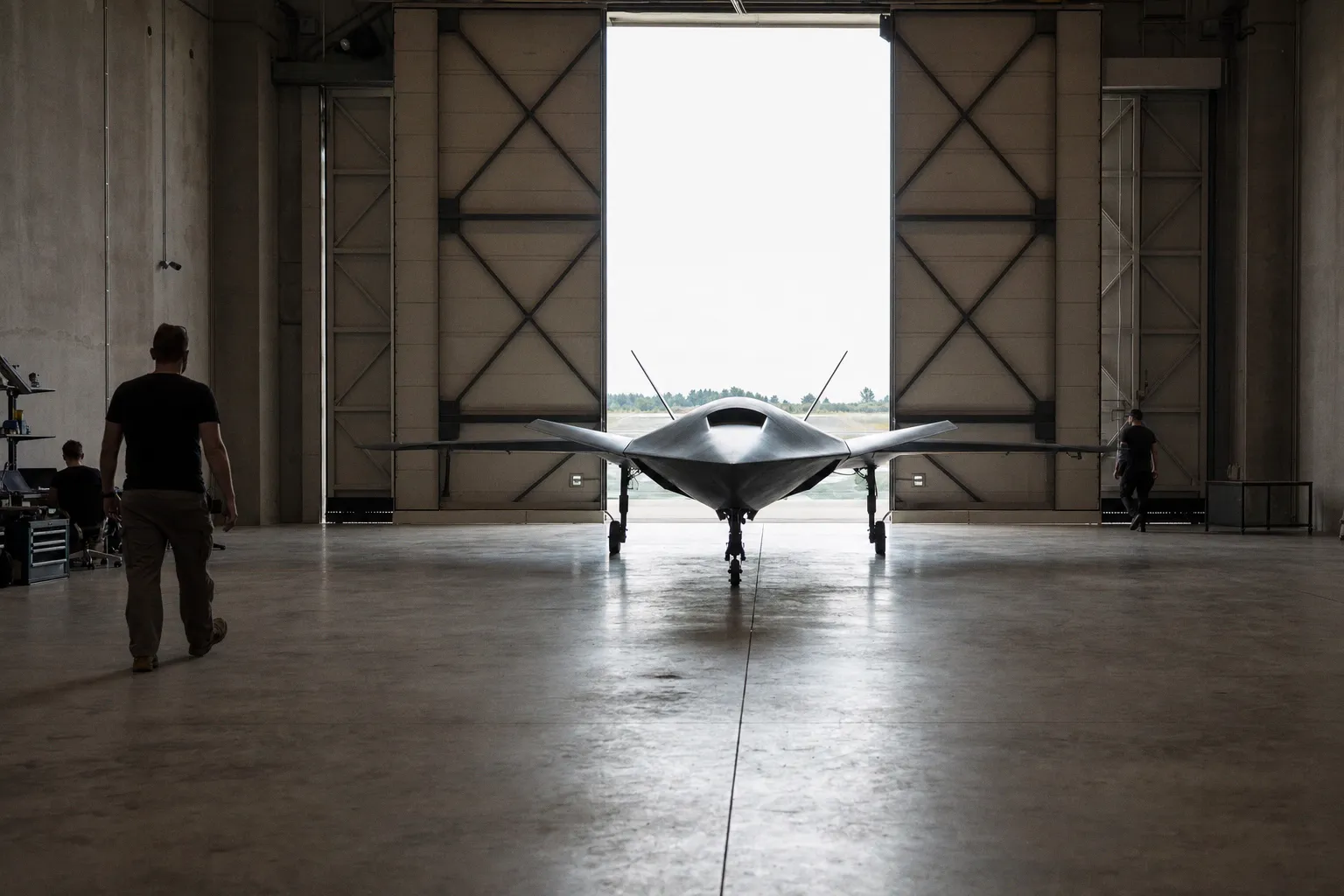
The cash fuels the CA-1 family, a modular autonomous aircraft system built by subsidiary Grob Aircraft. The platform splits into two variants:
- CA-1KA (Kinetic Attack): The strike version, with first flights targeted for early 2027 and an initial operating capability (IOC) goal of 2029.
- CA-1EA (Electronic Attack): Unveiled in June 2026, it’s designed to jam enemy radar and create corridors for manned fighters like the Eurofighter. Its IOC is set for 2031.
Both share the same airframe, propulsion, and autonomy software. This modularity is a cost-play; it reduces manufacturing and maintenance overhead while allowing payload swaps for different missions. It’s a direct bet that software-defined warfare will favor scalable, interoperable systems over single-purpose platforms.
Market Context & What to Watch
Helsing and Quantum Systems are now the twin pillars of European defense tech capital. Quantum positions as a future “neo-prime” in drones; Helsing is a pure-play on AI for autonomous aviation. The capital concentration here is stark: late-stage funding is flowing into proven teams and tangible hardware-software stacks. Early-stage investors are finding the exit door in public listings rather than acquisitions.
For builders, the signal is clear: sovereign defense budgets are scaling, and AI autonomy is where the institutional money is placing its biggest bets. The timeline is long—IOC in 2029 is a distant milestone—but the committed capital de-risks the R&D phase. Watch the burn multiple on the CA-1 program and whether the modular approach actually delivers on its cost promises.
The capital surge isn’t isolated to defense. For a look at how massive funding is reshaping another capital-intensive sector, see this deep dive on EV infrastructure and buyer guides. The pattern repeats: hardware-software integration attracts billions, but viability hinges on hitting hard technical and cost targets.
Verdict: A capital-intensive, long-cycle bet with top-tier backing. The valuation assumes CA-1 will define a new category in autonomous warfare. Execution risk is high, but the market is pricing in success.