Does ISO 9001 Certification Pay Off for Small Factories?
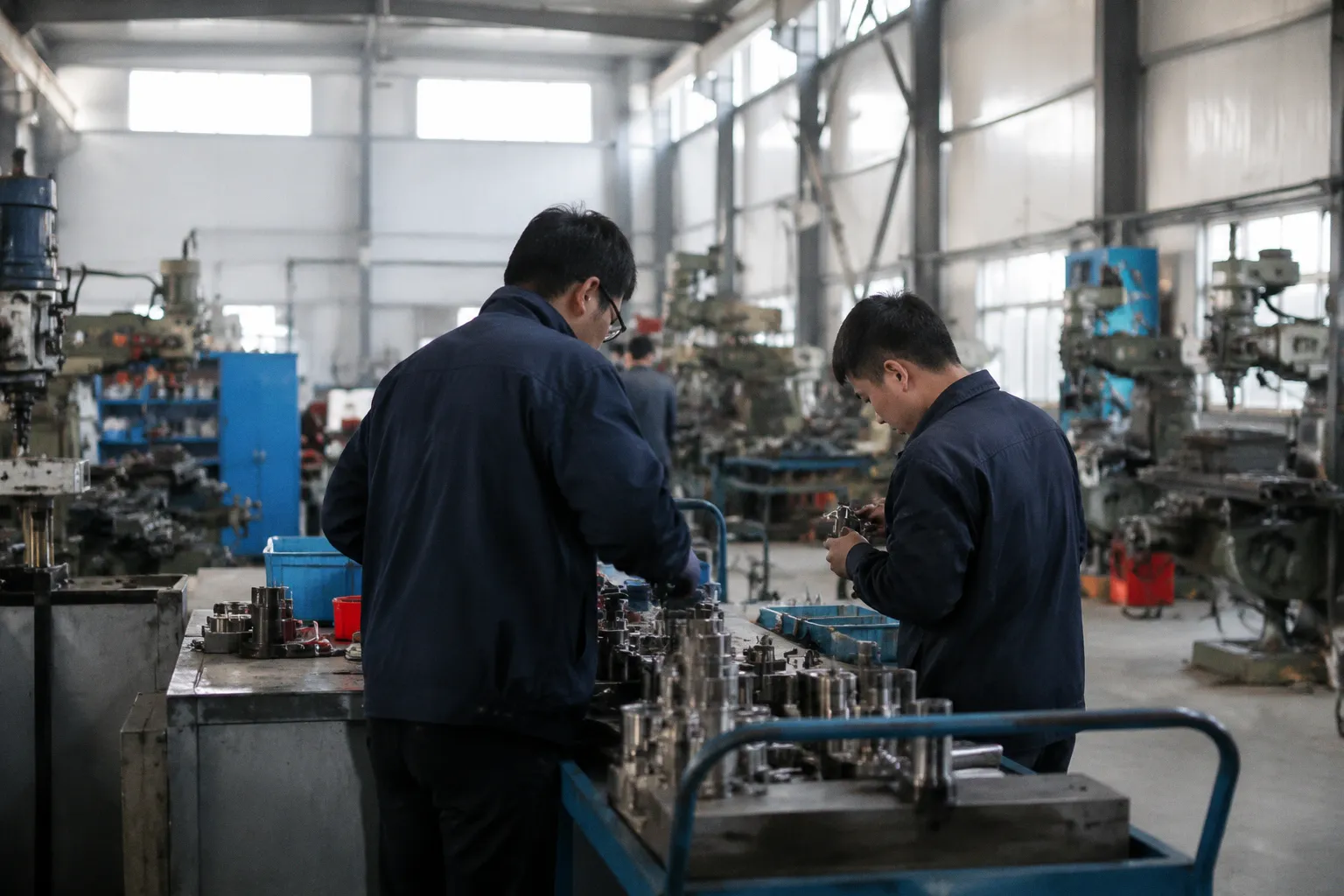
Does ISO 9001 Certification Pay Off for Small Factories?
Let's unblock the real picture together, because the glossy brochures from registrars won't do it for you.
---
The Hidden Costs of Compliance: Beyond the Registrar Fees
When most small factory owners start pricing out ISO 9001 certification, they fixate on the registrar's invoice. That's understandable — it's the most visible number. But the registrar fee is often the smaller portion of what you'll actually spend, and failing to account for the full cost picture is the first mistake that turns a sound strategic decision into a financial headache.
Here's where the budget really stretches:
1. Internal labor reallocation. Someone on your team — or several someones — will need to dedicate significant hours to documentation, process mapping, and internal audits. In a small factory, that person is often wearing four other hats. Every hour they spend writing a quality manual is an hour not spent on production oversight, customer fulfillment, or sales development. This opportunity cost is real, and it's the one registrars conveniently leave out of their proposals.
2. Process remediation. Once you start documenting your workflows against the ISO 9001:2015 framework's risk-based approach, you'll inevitably discover gaps. Maybe your incoming material inspection is inconsistent. Maybe corrective action procedures exist only in someone's head. Fixing these isn't free — it might mean new equipment, revised workflows, or additional training sessions that pull floor workers off the line.
3. Consultant fees. You can absolutely pursue certification without outside help, and I'll address that tradeoff later. But many small factories — reasonably — bring in a quality management consultant to guide them through the process. Consultant engagement can run $3,000 to $15,000 on its own, depending on scope and how much hand-holding your team needs.
4. Ongoing surveillance costs. Certification isn't a one-time purchase. The cycle runs three years, with annual surveillance audits required to maintain your status. Budget $1,500 to $4,000 per year for these check-ins, plus the internal labor to prepare for them. At the three-year mark, you face a recertification audit that costs nearly as much as the initial certification.
The real question isn't whether you can afford $15,000 for certification — it's whether you can afford the sustained operational discipline that keeps it valid.
Add it all up, and you're not looking at a single line item. You're looking at an ongoing operational commitment that reshapes how your factory runs on a daily basis. That can be a tremendous asset — or a tremendous burden — depending on how you approach it.
---
Market Access as the Primary Driver for Small Factory Growth
Here's where the conversation shifts from cost to consequence, and it's the reason I encourage every small factory owner I work with to look at their customer pipeline before they look at their budget.
Large corporations and government agencies increasingly mandate ISO 9001 certification as a prerequisite for supplier qualification. This isn't a soft preference — it's a hard gate. If you're a twenty-person injection molding shop trying to land a Tier 1 automotive supplier as a client, or a specialty fabricator eyeing defense subcontracting work, that certificate isn't a nice-to-have on your lobby wall. It's the key that unlocks the door to the conversation.
Consider the market dynamics at play:
- Government procurement. Federal and many state-level contracts in the U.S. require or strongly prefer ISO 9001-certified suppliers. If your growth strategy includes public-sector work, certification isn't optional — it's table stakes.
- Enterprise supply chains. Major manufacturers use certification as a pre-qualification filter. Without it, your proposal often doesn't make it past the first screening round, regardless of price or capability.
- International trade. ISO 9001 carries global recognition. For small factories exporting to markets in Europe, Asia, or the Middle East, it signals credibility that transcends local reputation.
- Competitive differentiation. In crowded commodity markets, certification can be the tiebreaker that tips a decision in your favor when two suppliers offer comparable pricing and lead times.
The math here becomes compelling quickly. If a single new contract — enabled by certification — generates $100,000 in annual revenue, the $15,000 to $25,000 total investment over the first certification cycle starts looking like a very efficient customer acquisition cost. But — and this is critical — only if you've aligned your sales strategy to actually pursue the opportunities that certification opens up. I've seen factories invest in certification and then continue selling exclusively to buyers who never asked for it. That's money left on the table and a missed strategic alignment.
Certification doesn't create demand by itself — it removes the barrier between your factory and the customers who were already looking for you.
Before you write a check to a registrar, sit down with your sales pipeline and honestly assess: how many qualified prospects are currently slipping away specifically because you lack this credential? If the answer is "several," the investment case writes itself.
---
Operational Efficiency Gains: Turning Quality Management into Cost Savings
Beyond market access, there's a quieter benefit that often surprises small factory owners once they're deep into implementation: the process discipline itself saves money. This is the part of ISO 9001 that gets undersold because it's harder to put on a marketing brochure, but in my experience, it's where the most durable ROI lives.
ISO 9001:2015 demands that you define, document, and measure your core processes. For a small factory that's grown organically — with tribal knowledge, undocumented workarounds, and a "we've always done it this way" culture — that discipline forces clarity in ways that ripple across the entire operation.
Here's what typically happens when you commit to genuine process-oriented quality management, not just certificate-chasing:
Waste reduction becomes systematic. When you document your material flow and start tracking defect rates by process stage, patterns emerge. You discover that a particular machine setup is generating scrap at twice the rate of similar equipment. You realize that a receiving inspection step was being skipped three days a week because no one owned it. These aren't dramatic revelations — they're the small, cumulative inefficiencies that bleed margin in every small factory. ISO 9001 gives you a structured framework to find and fix them.
Rework costs decline. One of the most immediate measurable impacts I see in small factories pursuing certification is a drop in rework hours. The corrective action requirements alone — when taken seriously — create a feedback loop that prevents recurring defects rather than just catching them downstream.
Employee accountability clarifies. Documenting processes means defining who is responsible for what. In small factories where roles are fluid and everyone pitches in everywhere, this can feel constraining at first. But it also eliminates the finger-pointing and ambiguity that slow down problem resolution. When something goes wrong, you know which process failed, which means you can fix the root cause instead of applying the same band-aid repeatedly.
Customer complaints decrease. Better process control leads to more consistent output. More consistent output leads to fewer returns and warranty claims. Fewer returns mean less scrambling, less unplanned expense, and — critically — stronger customer retention.
The efficiency gains won't show up in month two of your implementation. They'll start surfacing around month eight to twelve, once the documented systems are actually being followed and refined through your internal audit cycle. And they compound over time, which is why factories that have been certified for multiple cycles tend to report the strongest financial returns — the savings deepen as the system matures.
---
Navigating the 18-Month Implementation Lifecycle
Let's calibrate expectations on timeline, because this is where reality diverges sharply from registrar marketing. The six-to-eighteen-month range exists because every factory's starting point is different, and the gap between where you are and where the standard requires you to be determines how long the journey takes.
If you're a small factory with relatively straightforward processes, an engaged leadership team, and some existing documentation habits — even informal ones — you might land at the shorter end. If you're starting from near-zero documentation, your processes are heavily reliant on individual expertise, and your leadership team views this as an IT or quality department project rather than an organizational priority, you're firmly in the twelve-to-eighteen-month territory.
The implementation lifecycle roughly breaks into phases:
| Phase | Typical Duration | What's Happening |
|---|---|---|
| Gap analysis | 2–4 weeks | Assessing current state against ISO 9001:2015 requirements; identifying what's missing |
| Documentation | 2–4 months | Writing quality manual, procedures, work instructions, and forms |
| Implementation | 3–6 months | Rolling out documented processes, training staff, running new workflows |
| Internal audit | 1–2 months | Conducting your own audit to verify the system works; closing nonconformities |
| Management review | 2–4 weeks | Leadership evaluates system performance and readiness for certification audit |
| Certification audit (Stage 1 & 2) | 1–2 months | Registrar reviews documentation, then visits your facility to verify compliance |
That's a compressed view, and in practice these phases overlap. But notice where the time really goes: implementation. That's the human-change-management part — getting your floor operators, supervisors, and office staff to actually follow the new procedures consistently. This is where most small factories underestimate the effort. Documentation is a project. Behavior change is a campaign.
A few practical realities worth internalizing before you commit:
- Leadership buy-in isn't negotiable. If the factory owner or general manager treats this as a delegated task that quality can handle alone, the implementation will stall. The standard explicitly requires top management to demonstrate commitment and accountability. That means showing up to reviews, allocating resources, and visibly championing the changes.
- You can do it without a consultant, but count the cost of learning. Some small factories navigate certification independently using online resources, templates, and registrar guidance. Others hire consultants. Neither path is inherently better — it depends on your team's capacity for self-directed learning and how much risk you can tolerate in the timeline. A consultant compresses the learning curve. Self-guided implementation saves cash but extends the timeline and increases the risk of audit findings.
- Don't chase perfection before the audit. The certification audit isn't pass-fail in the binary sense. Registrars expect to find minor nonconformities, especially in first-time certifications. What they're looking for is evidence that your system is functional, that leadership is engaged, and that you have a process for identifying and correcting issues. Waiting until everything is perfect is a procrastination trap that extends timelines by months.
For practical guidance on managing this kind of complex personal and professional planning alongside business demands, resources like cemreroman.com offer useful frameworks for balancing life logistics with high-stakes professional commitments — something every small factory owner understands intimately.
---
Strategic Risk Assessment: When Certification Becomes a Competitive Necessity
Not every small factory needs ISO 9001 certification right now. That's an honest assessment, and anyone telling you otherwise is probably selling consulting hours. But the decision framework for when to pursue it deserves more nuance than "we're not ready" or "we'll get to it eventually."
Certification shifts from optional to necessary when one or more of these conditions is true:
Your target market requires it. If the customers you want to serve — not just the ones you currently have — use certification as a supplier qualification gate, then the question isn't whether to pursue it, but how quickly you can get there. Every month without certification is a month of revenue you're structurally locked out of.
Your quality costs are rising unsustainably. If rework, scrap, returns, and warranty claims are climbing as a percentage of revenue, the process discipline embedded in ISO 9001 directly addresses those cost drivers. Certification gives you a structured, auditable system for driving those numbers down — and the external audit pressure ensures you actually maintain the discipline rather than letting it slide once the initial enthusiasm fades.
You're scaling and losing institutional control. Factories that grow from five people to twenty or thirty often hit an inflection point where the founder's direct oversight no longer reaches every process. Informal quality control that worked when the owner stood on the floor breaks down at scale. ISO 9001 provides the management infrastructure that substitutes for that lost proximity — documented processes, defined responsibilities, measurement systems, and regular review cycles.
Your competitors are certified and winning bids because of it. In many manufacturing niches, certification has become so widespread among mid-sized and larger competitors that the absence of it actively signals weakness. When a buyer sees two comparable proposals and one supplier has a documented quality management system backed by third-party certification, the credibility gap is hard to overcome with pricing alone.
The right time to pursue certification isn't when you can afford it — it's when the cost of not having it becomes visible in your pipeline.
If none of those conditions apply to your current situation — if your customers are local, your quality costs are stable, your team is small enough for direct oversight, and your competitive landscape doesn't demand it — then deferring certification is a rational choice. Invest those resources in strengthening your core operations and building the documentation habits that will make certification easier when the time comes. But treat that deferral as a strategic decision with a review date, not a permanent state of avoidance.
---
The Verdict: Earning It, Not Just Paying for It
So does ISO 9001 certification pay off for small factories? In my experience, it does — but only when pursued as an operational transformation rather than a purchased credential. The factories that extract real ROI are the ones that use the implementation process to genuinely improve how they work: tightening processes, clarifying accountability, reducing waste, and positioning themselves for customers they couldn't previously reach. The factories that treat it as a checkbox exercise — chasing the certificate while minimally changing their actual operations — spend the same money and time but get a fraction of the return.
The math is straightforward if your market access story is clear. A $15,000 to $25,000 investment over the first certification cycle, amortized against even one meaningful new contract, pays back quickly. The operational efficiency gains — reduced scrap, fewer returns, more predictable output — compound over subsequent cycles as your quality management system matures. The ongoing surveillance audit costs become a manageable operating expense, not a financial event.
But don't let anyone tell you it's painless. The six-to-eighteen-month implementation demands real leadership attention, real process change, and real cultural adjustment within your team. That's the part no registrar emphasizes in their sales pitch, and it's the part that determines whether certification transforms your operation or just decorates your lobby.
Here's the question I'd leave you with: look at your current customer pipeline and your operational pain points honestly. Are the buyers you're losing — or the costs you're absorbing — significant enough to justify eighteen months of focused organizational change? If they are, stop deliberating and start the gap analysis. If they're not, set a calendar reminder for twelve months from now and reassess. The worst outcome isn't deciding against certification — it's never making a decision at all.