Does Automating Warehouses with AMRs Justify the Cost?
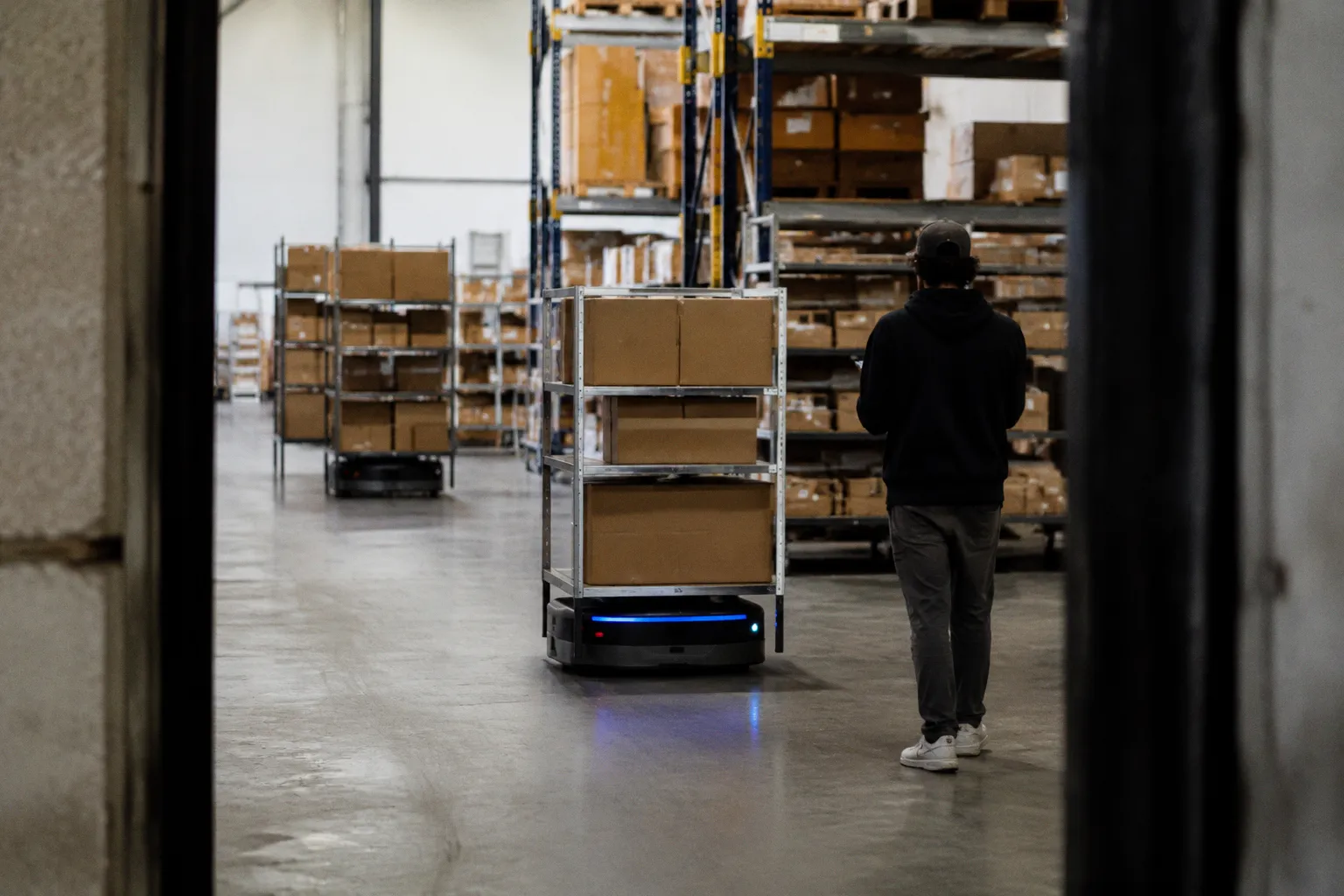
I have sat across the table from operations leaders wrestling with this decision, and I can tell you the math usually works. But it does not work the way the glossy vendor decks suggest. The 1–3 year ROI window is real, the 200–300% picking productivity jump is real, and the infrastructure savings versus legacy AGV systems are real. The hidden cost, the one that swallows budgets and kills good intentions, is the assumption that you can drop robots onto an unchanged floor and call it a day. Let me walk you through how to actually evaluate this decision with clear eyes.
You do not buy an AMR fleet. You buy a re-engineered workflow that happens to move itself.
The Economics of Labor: Why AMR Adoption Targets the 50-70% OPEX Gap
Before you get seduced by throughput numbers, you need to anchor this conversation in the only place a capital expenditure of this size can be justified: your P&L. Labor is the single largest controllable cost in almost every warehouse operation, and it is the cost AMRs are engineered to attack. When 50–70% of your OPEX is tied to people who walk, pick, carry, and restock, even modest productivity gains per worker translate into dramatic structural savings. That is the lever.
In my experience, the operations leaders who run the cleanest ROI calculations start by mapping three numbers with ruthless honesty: your fully-loaded hourly labor cost (wages plus benefits plus training plus turnover replacement), the average number of walking hours per shift per picker, and the current error or mis-pick rate that triggers returns, credits, and customer friction. Once you have those, you can isolate the exact share of your labor budget that is, frankly, motion waste. A picker walking eight miles a shift to retrieve totes is not generating value from the seventh mile. An AMR moving that tote allows the human to stay in a productive zone, hands on product, eyes on the order. The savings are not theoretical. They compound across every shift, every day, every SKU.
This is also where the labor shortage reality hits. Even if you wanted to "just hire more people," the labor market in logistics has made that path increasingly expensive and increasingly unreliable. The 12–36 month payback period on AMRs is, in many operations, simply the cost of buying back operational stability that the labor market can no longer provide. You are not replacing humans. You are unblocking the human work that actually requires judgment, dexterity, and customer-facing care.
A useful way to think about this is to separate your labor budget into two buckets: value-generating activity and motion overhead. Value-generating activity is the part where a human applies judgment — verifying an item, handling fragile goods, solving an exception, speaking to a customer. Motion overhead is everything else: walking between zones, waiting for a forklift to clear an aisle, pushing a cart back to a staging area. In most manual warehouses, the split is horrifying: motion overhead can consume 40% to 60% of a picker's shift. AMRs attack that overhead directly. They do not replace the judgment. They eliminate the dead time around it.
Infrastructure Flexibility: Comparing SLAM-Based Navigation to Legacy AGV Costs
Here is where the conversation gets genuinely interesting, and where a lot of legacy operations waste money without realizing it. Traditional Automated Guided Vehicles (AGVs) have been around for decades, and they work brilliantly in tightly engineered, high-volume, fixed-path environments. The problem is the path. AGVs typically require magnetic tape, wire guidance, or fixed QR-code grids embedded in your floor. Every layout change, seasonal racking adjustment, or throughput reconfiguration means ripping up infrastructure and reinstalling it. That is not just a capital cost, it is an operational tax you pay every single time your business adapts to its market.
AMRs flip this on its head. They use SLAM technology (Simultaneous Localization and Mapping) to navigate dynamic environments using onboard sensors and constructed maps, with no permanent infrastructure required. The practical impact is a 30–50% reduction in installation costs compared to AGV deployments, and more importantly, a dramatic reduction in the long-tail cost of change. When your customer demands a new pick face layout in Q3, you do not need a construction crew. You re-map the floor in software, push the update to the fleet, and resume operations. That flexibility has a value that does not show up in the initial quote but absolutely shows up over a three-to-five-year horizon.
| Parameter | Legacy AGV Fleet | AMR Fleet (SLAM-Based) |
|---|---|---|
| Navigation Method | Magnetic tape, wire, or floor QR grids | Onboard SLAM, no fixed infrastructure |
| Installation Cost Baseline | Higher (full floor integration) | 30–50% lower than AGV |
| Layout Change Cost | High (re-install infrastructure) | Low (software re-map only) |
| Best Fit Environment | High-volume, fixed-path, low-change | Dynamic, multi-SKU, seasonal shifts |
| Scalability Pattern | Linear and disruptive | Modular and incremental |
That said, let me give you the honest caveat the sales team will not volunteer. If you are running a single-purpose, high-velocity distribution center with stable SKU placement and brutal volume demands, AGVs may still serve you well and at a lower per-unit cost. The technology choice is not a religion. It is a function of your operational variability, your growth trajectory, and how often you expect to reconfigure the floor. Make sure your vendor gives you both options, not a one-size-fits-all pitch.
There is a secondary infrastructure cost that rarely makes it into the first conversation: charging. AMRs need to charge, and the way you design your charging infrastructure has real implications for fleet size, uptime, and floor space. Some operators build centralized charging stations where robots rotate through during natural workflow lulls. Others deploy opportunity charging — short, frequent top-ups at stations near the robots' operating zones. The right approach depends on your shift structure and cycle times, but it is not a footnote. Get it wrong and you will need 15–20% more robots than your throughput math called for, simply to cover downtime. Get it right and you squeeze maximum hours out of every unit without buying a single extra bot.
Quantifying Throughput Gains: The 200-300% Productivity Multiplier
This is the number that gets executives excited, and rightly so. AMRs can increase picking productivity by 200% to 300% compared to manual, person-to-goods picking methods. The way this happens is not magic. It is geometry. When a human walks to a shelf, picks an item, walks back, and repeats, the walking is the tax. Remove the walking, or convert it to value-added station work, and the same human generates two to three times the order lines per hour. That multiplier is not a marketing claim, it is a structural property of the workflow.
But here is where I see leaders get sloppy. A 300% productivity gain in a controlled pilot is not a 300% productivity gain in your real warehouse on day 91 of deployment. The pilot benefits from new equipment energy, tight supervision, cherry-picked SKUs, and a floor optimized for the robots. Your real operation has seasonal volume swings, mixed inventory, legacy racking, and a Warehouse Management System (WMS) that may or may not speak politely to the new fleet. When you model your throughput gain, discount the vendor's headline number by a humility factor. If they promise 300%, plan for 180% in your financial model. If you beat that, you have a story for the board. If you hit your conservative case, the project still pays back. That is the only way to build a model that survives contact with reality.
I also want to call out something the productivity conversation often misses: the gains are not just in picking speed, they are in picking accuracy. An AMR following a directed route with a barcode scan at the put wall does not grab the wrong tote at 4:47 PM on a Friday. The accuracy improvement shows up downstream as fewer returns, fewer credits, fewer customer service tickets, and a tighter brand reputation. That is real money, and it almost never gets included in the vendor's standard ROI model. Insist on including it in yours.
Think about the compounding effect here. If your manual mis-pick rate is 1.5% — and for many mid-market warehouses it sits between 1% and 3% — and you ship 10,000 orders a day, that is 150 mis-picks daily. Each one generates a return label, a customer service interaction, a re-ship if the item is still wanted, and a write-off if it is not. Conservative estimates place the all-in cost of a single fulfillment error at $25 to $50 depending on your product category. At the low end, that is $3,750 per day, or nearly $1.4 million per year. An AMR-driven pick flow that cuts that mis-pick rate in half does not just improve your accuracy KPI on a dashboard. It puts real dollars back in your operating margin. Include that line in your ROI model. If your vendor does not, ask them why.
The 12-36 Month ROI Horizon: Balancing Capital Expenditure with Operational Scalability
Now to the heart of your question. Does automating warehouses with AMRs justify the cost? The honest answer for most operations is yes, within a 12 to 36-month payback window, with the wider end of that range applying to smaller deployments and the tighter end to larger, more painful labor-cost environments. But the ROI is not just a function of productivity gains. It is a function of how you structure the investment.
The traditional model is a capital purchase: you buy the fleet, you install it, you depreciate it, and you reap the savings. That model works if you have the capital, the appetite for balance sheet risk, and the operational certainty that the deployment will scale as planned. Increasingly, though, I am seeing operations leaders turn to Robotics-as-a-Service (RaaS) models, which convert the upfront capital outlay into a monthly operating expense, much like a SaaS contract. The 2024–2025 market has been moving hard in this direction, and for good reason. RaaS lets you scale the fleet up or down with volume, shifts the maintenance burden to the provider, and turns a multi-year capex project into a predictable opex line that finance teams can absorb without a cap committee brawl.
The 24/7 uptime potential of an AMR fleet is also worth pricing into your model. Most human-operated warehouses do not run three shifts at full efficiency, and even the best-paid night shift underperforms the day shift. Robots do not have a Tuesday. They do not have a slow hour after lunch. The effective capacity expansion of running a productive second and third shift, even at partial coverage, often closes the ROI gap faster than the productivity math alone would suggest.
The fastest AMR payback is not the one with the highest throughput — it is the one that lets you run hours your building used to leave dark.
When you sit down with your finance team to run scenarios, I would encourage you to build three models, not one. First, the base case: conservative productivity assumptions, current labor costs, known integration spend. Second, the labor-cost escalation case: what does the math look like if your hourly labor cost rises 5–8% per year, which is roughly the trajectory logistics wages have been on in most North American and Western European markets? Third, the growth case: if your volume increases 20% in the next 24 months, does the AMR fleet absorb that without a proportional headcount increase? In the escalation and growth cases, the payback window often compresses to the lower end of the range — sometimes below 12 months. That is the scenario your board actually needs to see, because it reflects the operational reality you are trying to get ahead of.
Beyond Plug-and-Play: The Hidden Costs of Process Re-engineering and WMS Integration
This is the section I would pay the most attention to, because this is where the projects I have seen go sideways actually go sideways. AMRs are not a plug-and-play solution. Anyone who tells you otherwise is selling you a fantasy that will surface in month four as a stalled deployment and a frustrated operations team. The robots themselves are the easy part. The hard part is everything that has to change around them for the robots to actually deliver the productivity you bought.
First, your WMS integration. Most operations have a WMS that was selected five, ten, or fifteen years ago, and it has accreted custom logic, workarounds, and integrations that the original vendor would barely recognize. An AMR fleet does not care about your WMS's history. It needs clean, real-time data: order priority, pick location, tote assignment, replenishment triggers, exception handling. If your WMS cannot deliver that data with low latency and high reliability, you are going to spend real money on middleware, custom development, or a WMS upgrade before a single robot delivers a single tote. Budget for it. The teams that budget for it are the teams that stay on schedule.
Here is a practical checkpoint: before you sign an AMR contract, run a two-week data audit. Have your IT team log the latency and completeness of the data feeds your WMS produces for the three most critical processes — order release, pick assignment, and replenishment triggers. If those feeds are clean, complete, and consistently under 500 milliseconds of latency, your integration path is probably straightforward. If they are not, you now have a concrete, scoped remediation project to price into your total investment. Do not skip this step. It is the single cheapest way to prevent the most expensive surprise in the entire project.
Second, your physical process. The way your floor is zoned, the way your pickers are organized, the way your replenishment cycle flows, the way your receiving and shipping docks interact with the picking floor — all of it needs to be re-examined through the lens of the new workflow. This is process re-engineering, and it is the single most underestimated line item in any AMR project. The operations leaders who treat this as an afterthought pay for it in schedule slippage and productivity gaps. The leaders who treat it as the actual project, with the robots as a tool inside the project, are the ones who hit their ROI targets on time.
Third, your change management. The people on your floor have a workflow they understand. Some of them will see the robots as relief. Some of them will see them as a threat. Some of them will actively resist, sometimes without meaning to, simply by continuing to work the old way. You need to bring your team into the project early, train them well, and give them a real role in shaping how the new workflow operates. The best AMR deployments I have seen were led by the floor supervisors, not the executives. The executives funded them. The supervisors made them work.
For smaller teams navigating this kind of capital-intensive technology rollout, the learning curve can be steep. The candid reality is that most of the expensive mistakes have already been made by someone else, and the operations leaders who seek out honest case studies from peers who have been through it consistently make better, faster decisions than those who rely solely on vendor narratives. Treat the research phase as seriously as the budgeting phase — it will save you money you cannot afford to waste.
So Does It Justify the Cost?
For most operations facing genuine labor pressure, growing volume, and a floor that needs to flex with the market, yes. The 1–3 year ROI window is achievable, the 200–300% productivity gain is real (with appropriate humility discounts), and the 30–50% infrastructure savings versus legacy AGVs gives you a flexibility dividend that compounds year over year. The path to that payoff, however, runs straight through process re-engineering, WMS readiness, and a serious change management plan. Skip those, and the robots become expensive shelf-sitters. Invest in them, and the math carries itself.
Here is the question I would put to you before you sign anything: if you ran the operations for the next eighteen months with the robots already deployed, what would your floor look like, how would your teams be organized, and what would your WMS need to deliver for the fleet to hit its numbers? If you can answer that clearly, you are ready to evaluate vendors. If you cannot, you have just identified the real work that needs to happen before any robot ever rolls onto your floor.